



AMOLED Smartwatch OEM: From Brand Brief to Product Delivery
How SMA supports a global brand with AMOLED watch design, wearable algorithms, engineering validation and manufacturing coordination.
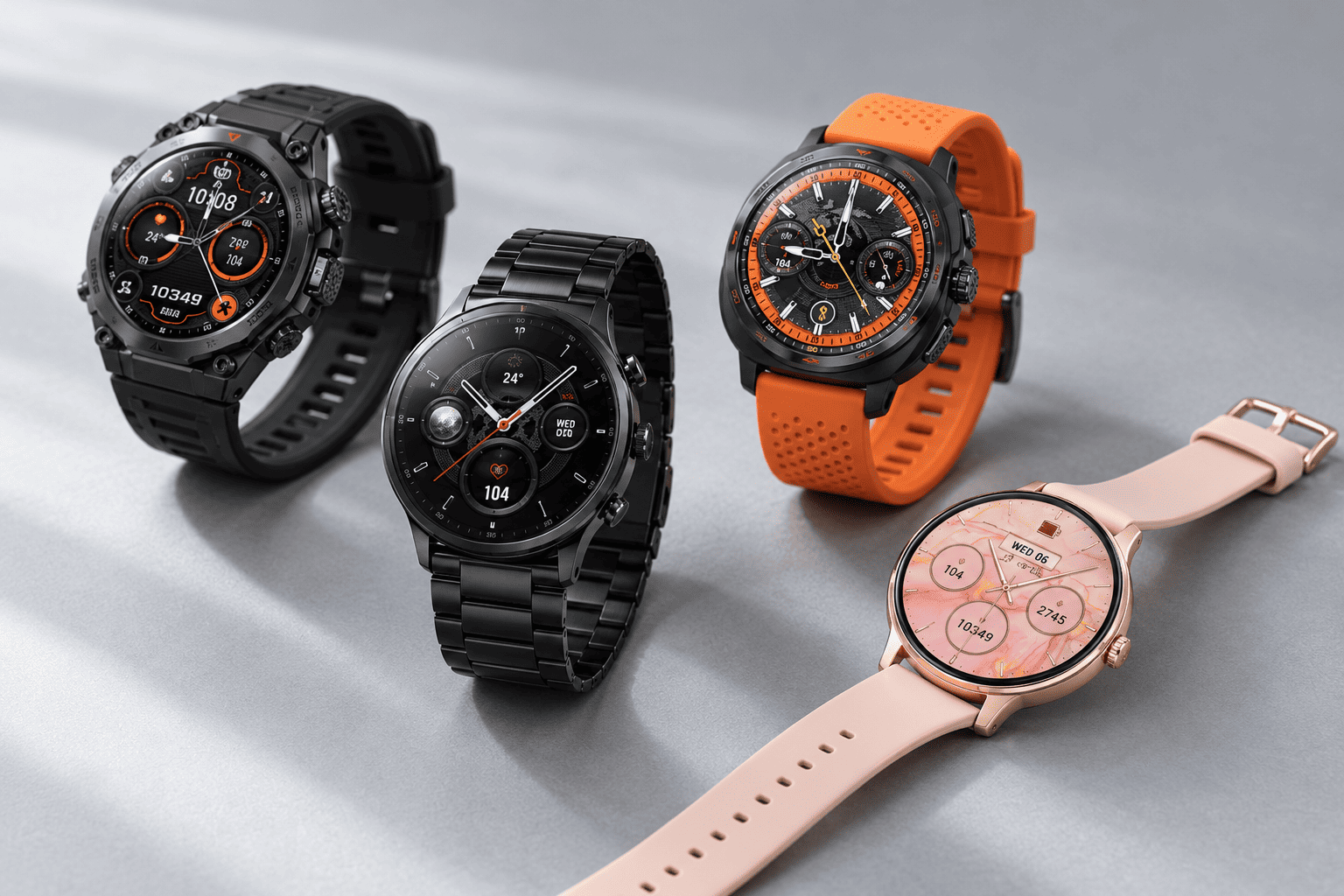
A global product, with a clear point of view
Your brand defines the watch. Our job is to make the brief buildable—and ready for delivery.
The customer needs an AMOLED watch that fits an established global wearable range: a clear display, recognisable design, useful health and sports features, and a reliable path from samples to production. SMA supports that brief through connected product development and manufacturing coordination.
The customer behind this case operates across lifestyle, fitness and outdoor wearables, with an established connected-product experience. That makes the OEM brief especially demanding: a new watch should extend the brand’s range while preserving the qualities its users already recognise. Our role at SMA is to connect that product direction with practical engineering and a controlled route to delivery.
Turn the customer’s priorities into an OEM specification
We start by discussing the intended wearer, market positioning and priorities for everyday use. Which information belongs on the first screen? Which functions justify their cost and power demand? Which details must remain consistent with the customer’s wider portfolio? These decisions turn an attractive concept into an actionable AMOLED smartwatch OEM brief.
A shared requirements document then connects appearance, hardware options, firmware scope, language requirements and packaging. It also distinguishes an adaptation of an established platform from deeper development. That distinction keeps design ambition, engineering effort and the delivery plan aligned from the outset.
For a brand comparing an AMOLED smartwatch OEM manufacturer, the practical questions go beyond a logo: which case and strap options can be reproduced consistently, how custom watch faces fit the selected platform, and what evidence is required before production release. This private label AMOLED smartwatch development approach links each request to an engineering decision and an approval point.
AMOLED should feel as good as it looks
The appeal is in the detail
AMOLED’s self-emissive pixels bring deep blacks and strong visual separation to a compact display. Used well, that makes a watch face feel crisp and a short message easier to scan. The benefit is strongest when the interface respects the screen: considered spacing, restrained colour and information that fits naturally inside the dial.
For private-label AMOLED smartwatch development, we review typography, icons, watch faces and menu order as one system. A bright accent should help someone find a function. A dark background should support contrast. Neither replaces checking the interface on the actual panel, including small labels and translated text.
Display quality also belongs in the power discussion. Brightness policy, screen timeout and wake behaviour affect the experience as much as the panel choice. Always-on display, calling and positioning are options to assess against the selected platform; they should enter the specification only when the supporting hardware and software are agreed.
From sensing to something useful
Useful intelligence begins with a clear relationship between the sensor, the algorithm and the person wearing the watch.
Activity and sleep
SMA’s smart wristband algorithm platform also serves smartwatch applications. Its published scope includes activity tracking, sleep analysis and movement recognition. For this category of product, those capabilities provide a starting point for discussing daily summaries, overnight records and prompts that arrive at a useful moment.
More than a mode list
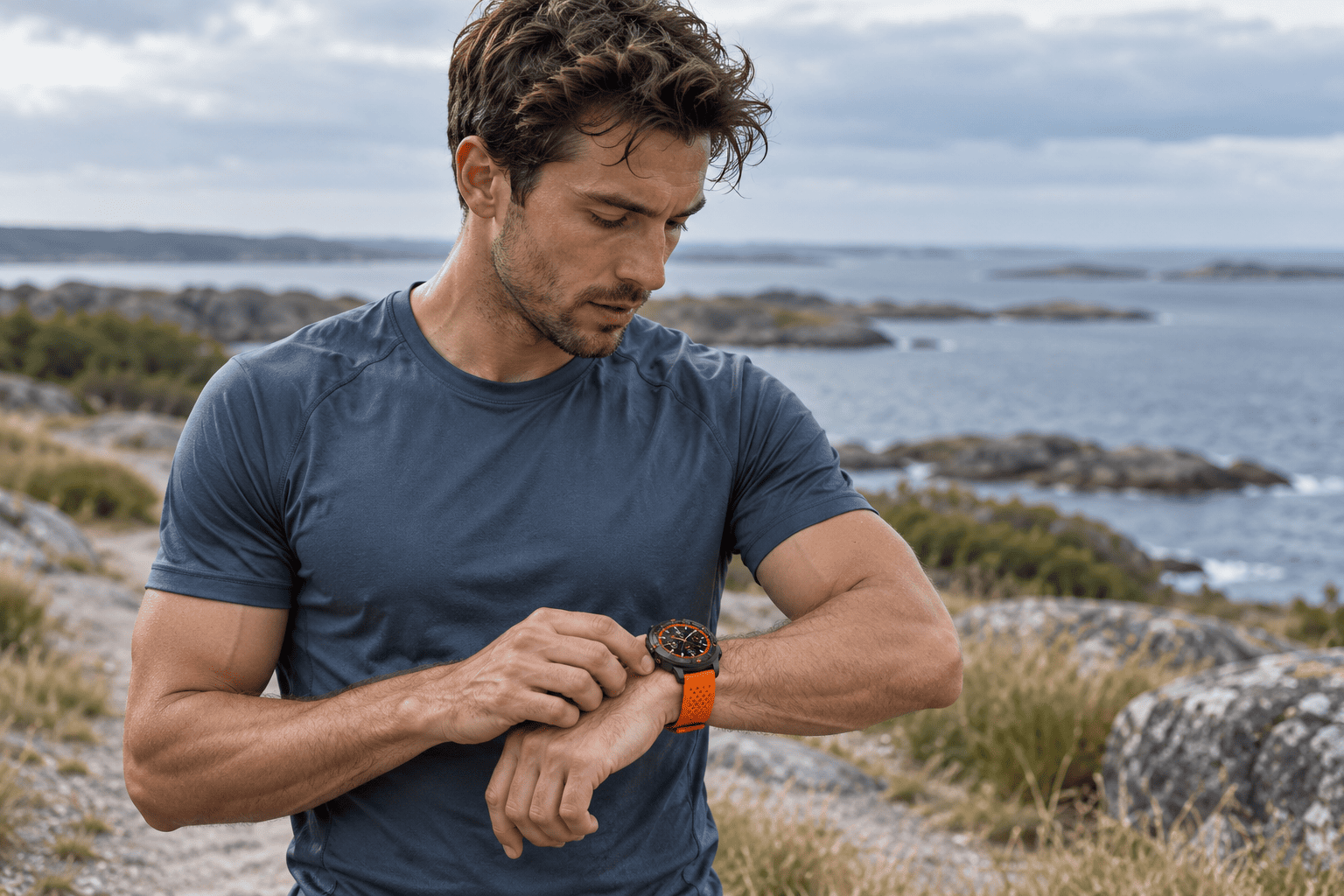
Sports features need a similar sense of purpose. Heart-rate zones, training load, recovery and fitness-related estimates can help explain an activity when the chosen platform supports them. A long list of modes is less persuasive than a smaller set of well-explained records that users can understand afterwards.
A watch that responds
Gesture functions such as raise-to-wake connect sensing with everyday convenience. They also expose the importance of tuning: the watch should respond when needed without repeatedly waking during unrelated movement. Sensor placement, wearing position and firmware behaviour all belong in that conversation.
Heart-rate, blood-oxygen and sleep-related features also need a coherent presentation. A useful health-tracking smartwatch explains what a reading represents and makes longer-term records easy to review. During integration, the sensor arrangement and wearing fit deserve attention alongside the software, especially when interpreting movement-heavy activities.
Translate capability into an agreed feature set
Wearable algorithm integration is not a matter of copying every available metric into a menu. We map the chosen functions to the sensor configuration, processing resources and intended user experience. Advanced metrics require suitable inputs and validation; wellness estimates should be described clearly, with no suggestion that a consumer watch provides a medical diagnosis.
One product. Connected engineering.
Make the disciplines work together
SMA brings industrial design, mechanical engineering, electronics, firmware and application development into its wearable R&D offering. The value of that combination becomes visible at the boundaries. A thinner housing changes component space; a different sensor window changes the mechanical design; a new screen behaviour changes the power budget.
Our custom smartwatch hardware and firmware development approach keeps those decisions connected. Case proportions, strap attachment, charging access and the sensor’s contact with the wrist need review alongside the board layout and software behaviour. Solving them together reduces the risk of an appealing exterior concealing an awkward daily experience.
Review a system, not isolated screens
Prototype review should follow ordinary journeys: pairing the watch, adjusting a setting, starting an activity, reading a notification and charging afterwards. The same exercise needs to account for selected languages and supported phone environments. Bluetooth calling, app integration and OTA update arrangements are defined within the agreed platform scope, rather than assumed from the product category.
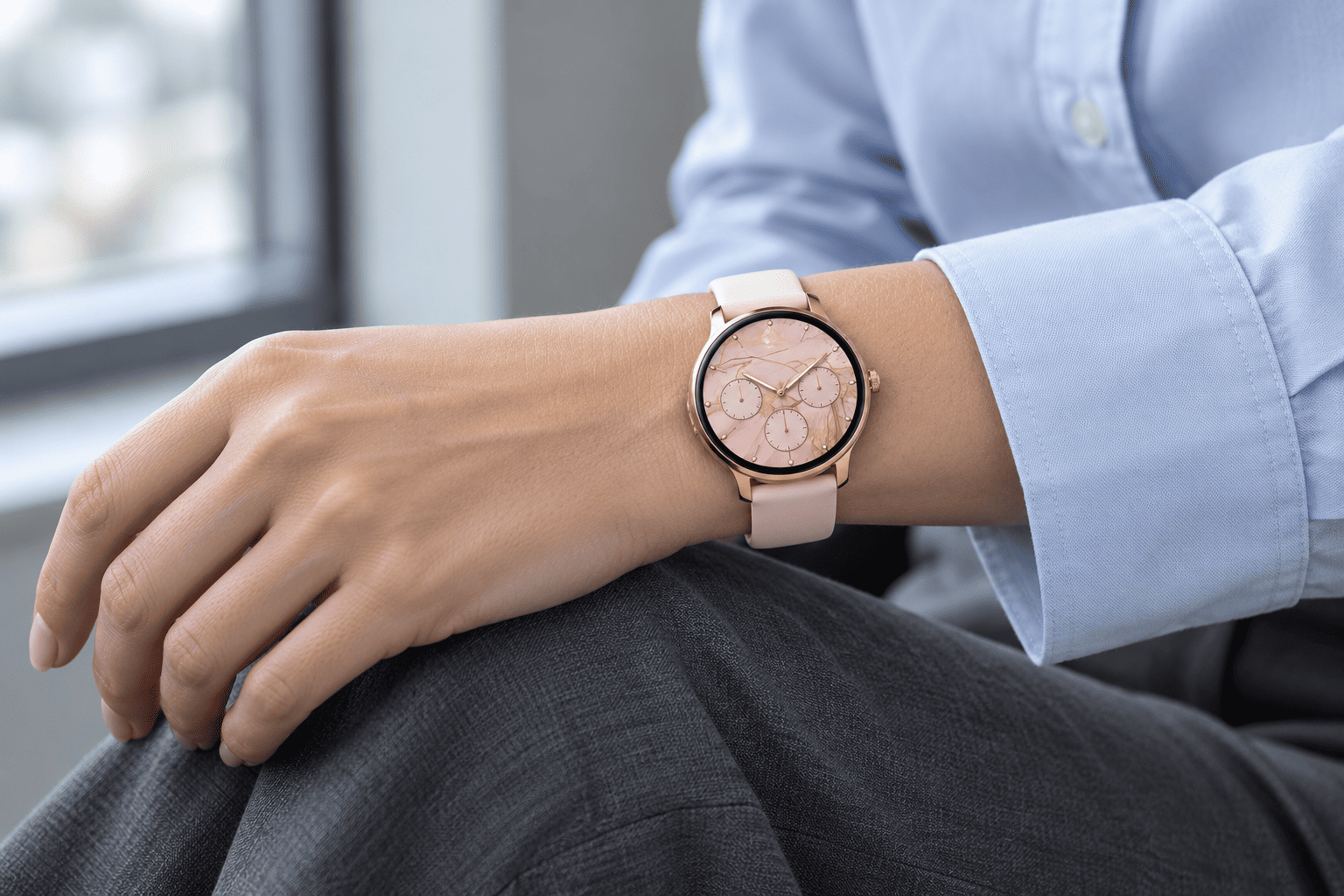
Material and strap choices carry the same brand responsibility. A refined metal finish, a comfortable fastening and a balanced case can make the AMOLED display feel part of a considered object. We review these choices against the selected platform and manufacturing requirements, so the visual direction remains reproducible.
Feedback becomes an issue list with an owner and a version reference. A revised sample can then be compared with the previous one for a specific reason. That discipline makes smartwatch R&D collaboration easier to manage across teams and keeps approval grounded in the product’s behaviour.
Build consistency into every batch
The approved sample is a reference. Delivery requires a way to reproduce it.
SMA’s manufacturing capabilities include component sourcing, SMT and assembly. For a global-brand AMOLED watch project, these functions need a common product definition. The bill of materials, colour and finish references, firmware release and inspection criteria should describe the same product before production scales.
Engineering review
Resolve open design questions and confirm what the sample is intended to demonstrate.
Design validation
Check the agreed configuration against functional, mechanical and reliability requirements.
Pilot readiness
Review assembly methods, work instructions and inspection consistency before ramp-up.
Screen appearance, touch response, charging, sensor operation and cosmetic finish deserve explicit inspection criteria. Water-resistance verification must match the selected housing and rating. Applicable testing and certification support should likewise follow the intended destination markets and the final product configuration.
The delivery plan is built around these dependencies, alongside material availability and approved quantities. A firm shipment commitment needs the actual project schedule; a broad factory capability is not a substitute. This is where product delivery capability becomes practical: clear release conditions, controlled changes and information that both teams can act on.
Ready for the shelf. Ready for the wrist.
Finish the details the user meets first
OEM smartwatch customization continues beyond the case and dial. Packaging, charging accessories and first-use instructions shape the first experience of the brand. We bring these items into the product review so the retail box, quick-start guide and device use the same terminology.
For a range sold across markets, language versions, product labels and accessory compatibility require careful coordination. Packaging artwork needs approval alongside the product definition. A polished unboxing experience should also protect the watch and make its contents straightforward to identify.
Before dispatch, the handover should bring together the approved configuration, inspection records and packing requirements. That gives the customer a useful basis for receiving goods, supporting its channels and discussing later changes. The relationship stays connected to the product after the first sample conversation.
A successful AMOLED watch feels effortless on the wrist because the difficult decisions have already been made together. The display, the sensing and the delivery process tell one consistent story. For a global brand, that continuity is the real value of an integrated smartwatch OEM partner.