



A Golf Watch Built Around the Round: R&D Support for a U.S. Brand
From dual-band positioning to swing analysis: an R&D-led approach to shaping a custom golf watch around the way golfers play.
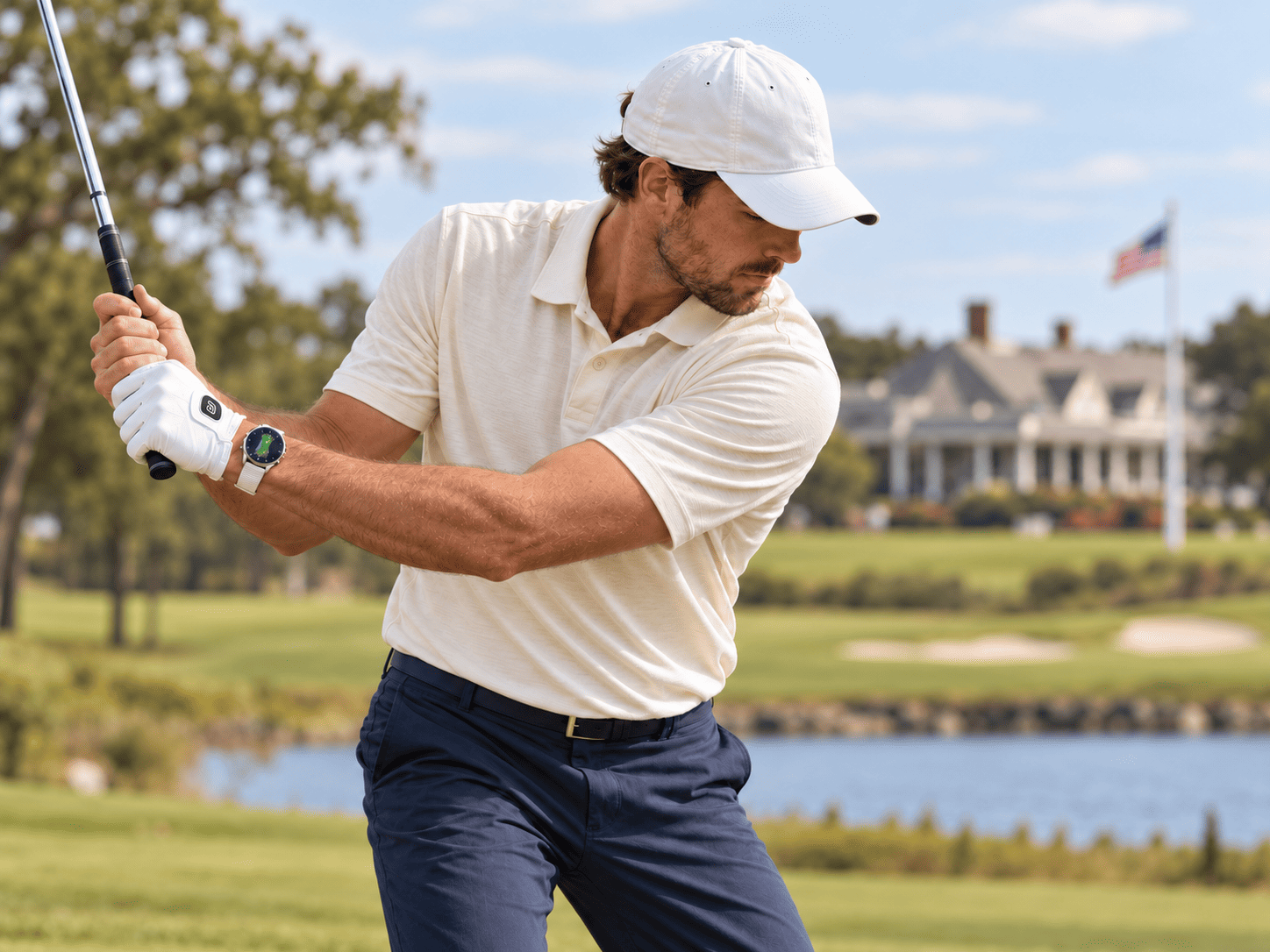
A round of golf has its own rhythm: a walk down the fairway, a moment to judge the next shot, then a swing. A useful golf watch fits into those pauses. The distance is easy to find; the hole makes sense at a glance. Beneath that quiet simplicity, positioning, course data, motion sensing and firmware have to work together.
For a U.S. golf-technology business with a range spanning distance-measuring equipment, training devices, watches and connected accessories, a custom golf watch belongs within a wider playing experience. This case examines the engineering approach behind that collaboration: connecting the customer’s product direction with SMA’s golf algorithms, wearable hardware development and manufacturing support.
A clear purpose, before a feature list.
Start with the golfer’s decisions
The player’s need
The customer’s product range addresses both practice and play. That gives the watch a clear role. It needs to be useful during a round, while its records give the golfer something worthwhile to review afterwards. The development brief begins with those moments on the course: what the player needs to know, when it matters and how quickly the answer can be found.
The interaction hierarchy
Our approach is to separate essential playing interactions from deeper analysis. Finding a course, selecting a tee and reading the current hole belong close to the surface. Swing records and wider sports data can sit further into the experience. This hierarchy gives a private-label golf watch a coherent purpose, with branding built around a usable product.
The shared specification
The distinction also helps define scope. Hardware options, course coverage, firmware behaviour and the customer’s presentation requirements need one shared specification. A feature can then be discussed in terms of its value to the golfer and its effect on memory, power and interface complexity.
Give the software the right hardware foundation
Display & processing
The supplied configuration pairs an AT3089C MCU with a 1.32-inch AMOLED display at 466 × 466 resolution. On a round screen, that resolution gives designers room to separate a prominent distance reading from smaller hole information and map details. Clear contrast, readable type and touch targets still need evaluation on the actual device in outdoor conditions.
Positioning integration
Positioning uses an AG3365 dual-band L1 + L5 GPS solution. The engineering task is to make receiver behaviour, antenna integration and the course-data workflow operate together. Dual-band support is a hardware capability; real-world positioning performance remains something to verify in representative playing environments, including trees and changing satellite visibility.
Sensing & storage
A six-axis motion sensor supports the golf analysis work, while the specified VC9213 + VP60A5 PPG configuration sits within the broader wearable platform. Optional 16GB, 32GB or 64GB eMMC storage provides choices for the agreed data package. These alternatives are configuration decisions, not three capacities supplied simultaneously.
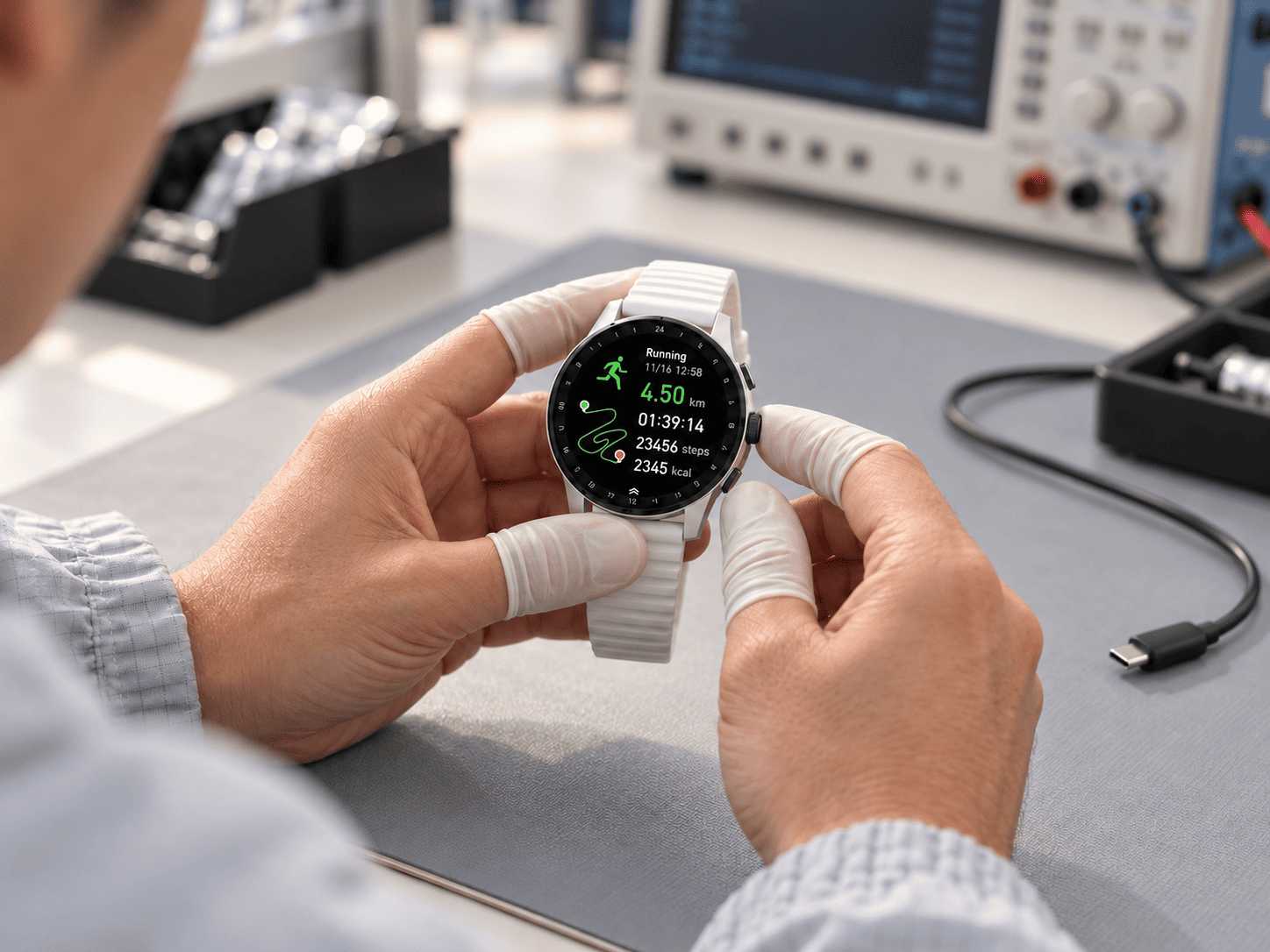
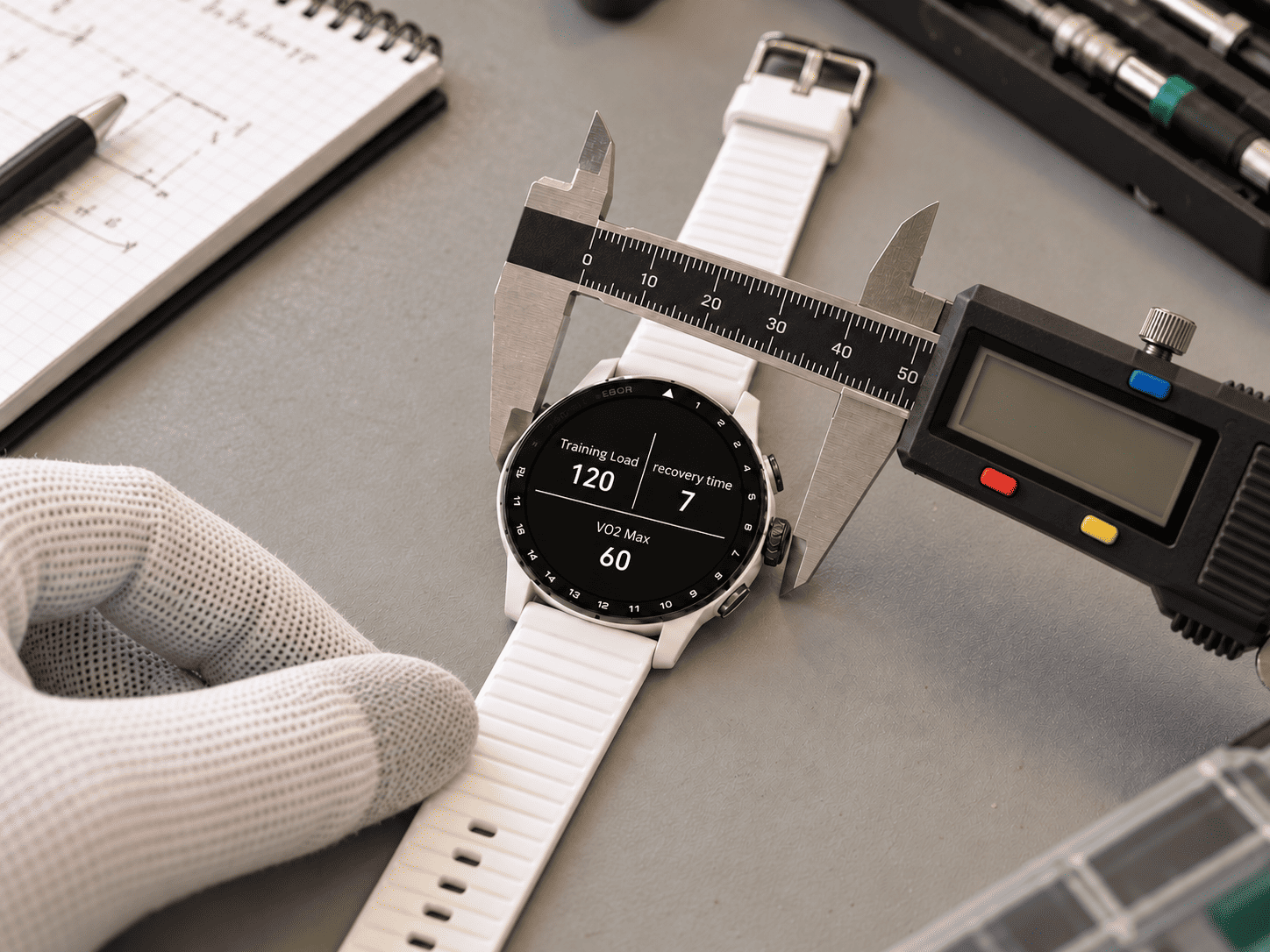
Where the round comes together.
Build a short path from GPS fix to the first hole
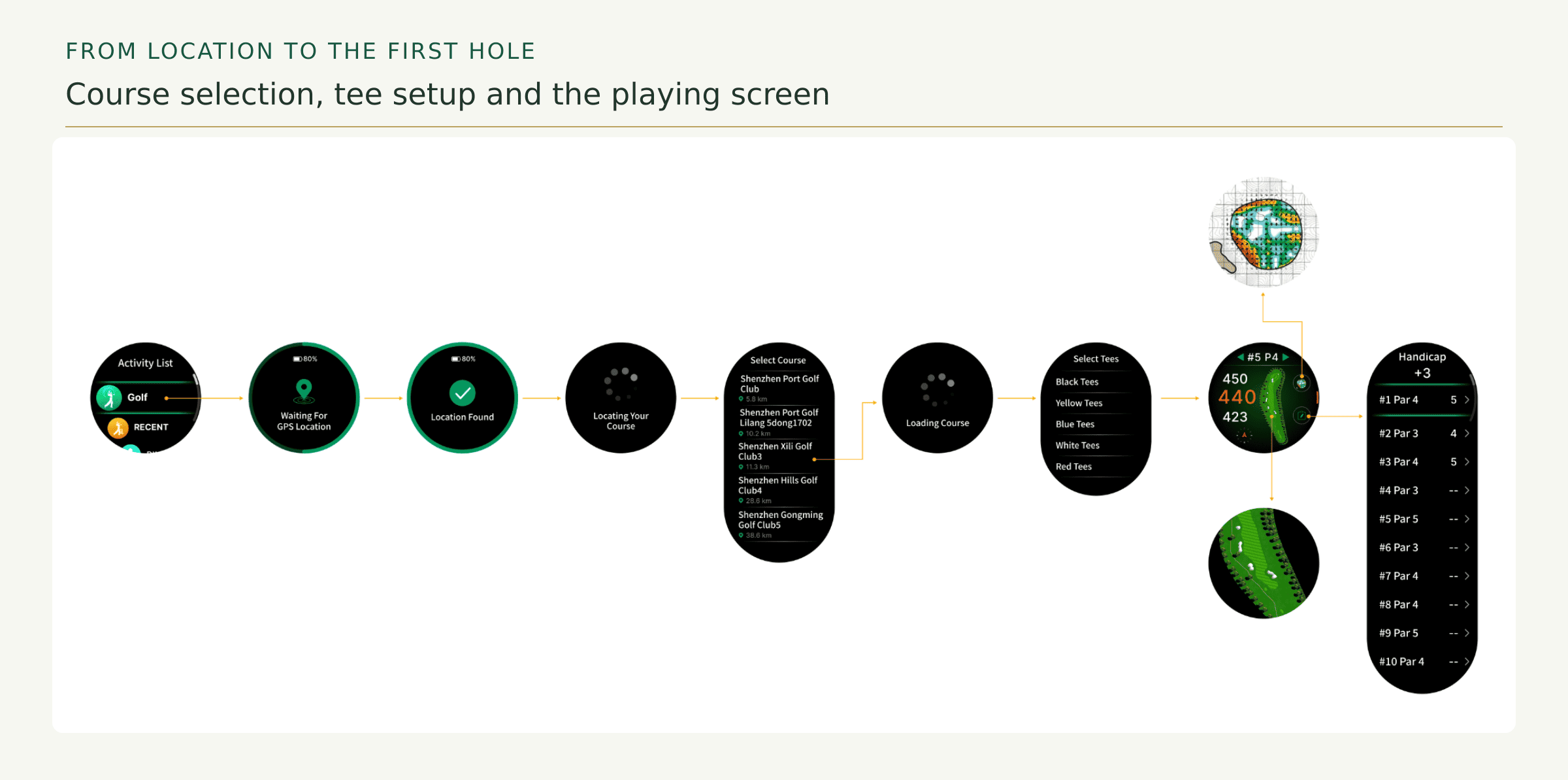
The supplied interface flow moves from Golf mode to location acquisition, course detection or selection, course loading and tee selection. The main playing screen follows, with access to a course view and hole information. The strength of that sequence is its clarity: each step has a reason to appear before the next.
The project specification describes 20,000+ stored courses with fairway, green and hazard layouts, alongside offline use of the loaded data. For an offline GPS golf watch, the important development questions concern the selected dataset, how it is packaged and how the user knows the right course is ready. Updates need their own defined delivery route.
Our firmware and interface review centres on the transitions. What appears while a location is being acquired? How is a nearby-course list presented? What happens if the intended course is unavailable? These small states deserve attention because they shape confidence before the golfer has played a shot.
Turn wrist movement into meaningful swing insights
From movement to insight
SMA’s golf performance solution uses six-axis sensor fusion to interpret motion. The supplied algorithm material covers stroke records, backswing and downswing timing, tempo, swing-speed analysis and plane-related insights. For golf watch algorithm development, the challenge is to turn those signals into understandable feedback rather than simply display more numbers.
Timing the swing
Timing is a useful example. Identifying the start of the backswing, the transition and the impact-related event allows the system to calculate phase durations and a tempo relationship. A 3:1 backswing-to-downswing ratio can serve as a reference in the interface; it should not be presented as a guaranteed ideal for every player or every type of shot.
Separating play from noise
Validation must also account for movement that is not a scoring stroke. Practice swings, walking and other wrist activity belong in the test discussion. Stroke totals should be reviewed alongside the intended correction and scoring workflow, rather than assume automatic detection will resolve every situation without user input.
Keeping the model honest
There is an important boundary here. A wrist-worn sensor measures movement at the wrist. It is not a radar launch monitor measuring ball flight. Speed, path or plane-related outputs need the appropriate model assumptions and validation for their intended use. Explaining that boundary makes a custom golf smartwatch more credible, especially for a customer already familiar with specialist golf equipment.
Make the AMOLED interface work at a glance
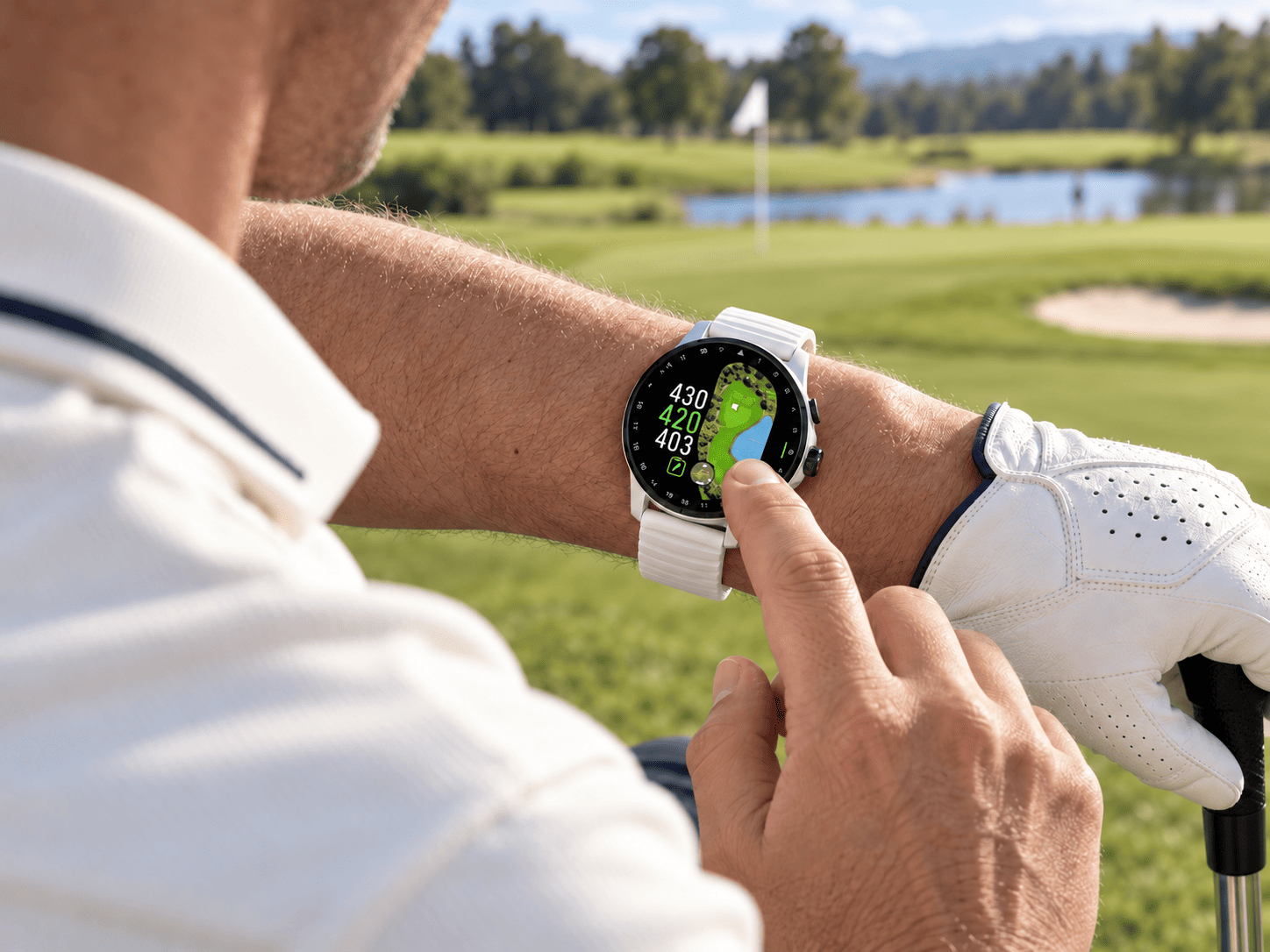
The playing screen needs a visual hierarchy that survives a short glance. Large distance values, concise hole information and a map that remains legible on a circular display are practical priorities. The supplied UI provides a starting point for a conversation about what the customer’s golfer needs to see first.
Customization can then address colours, icons, screen order and branded presentation within the agreed software scope. Consistency matters: a selection screen, a loading state and a swing report should feel like parts of the same product. We treat that continuity as part of wearable firmware development, not a final cosmetic layer.
Touch behaviour needs equal care. A full-touch display should make frequent actions straightforward without encouraging accidental changes during play. Prototype review is the place to check gestures, response, wording and the balance between map detail and readable information.
Balance a round of golf with everyday wear
The platform specification includes a 400mAh battery, four-pin magnetic charging and an approximate two-hour charging time. It does not provide a verified GPS runtime, so the development conversation needs to establish the intended usage profile before setting an endurance claim.
Power is a system decision
GPS operation, AMOLED brightness, sensor sampling and processing all contribute to consumption. Power planning means assessing these loads together, then testing the selected configuration through a realistic round. A battery capacity alone cannot establish how long a particular golf mode will run.
Define each capability clearly
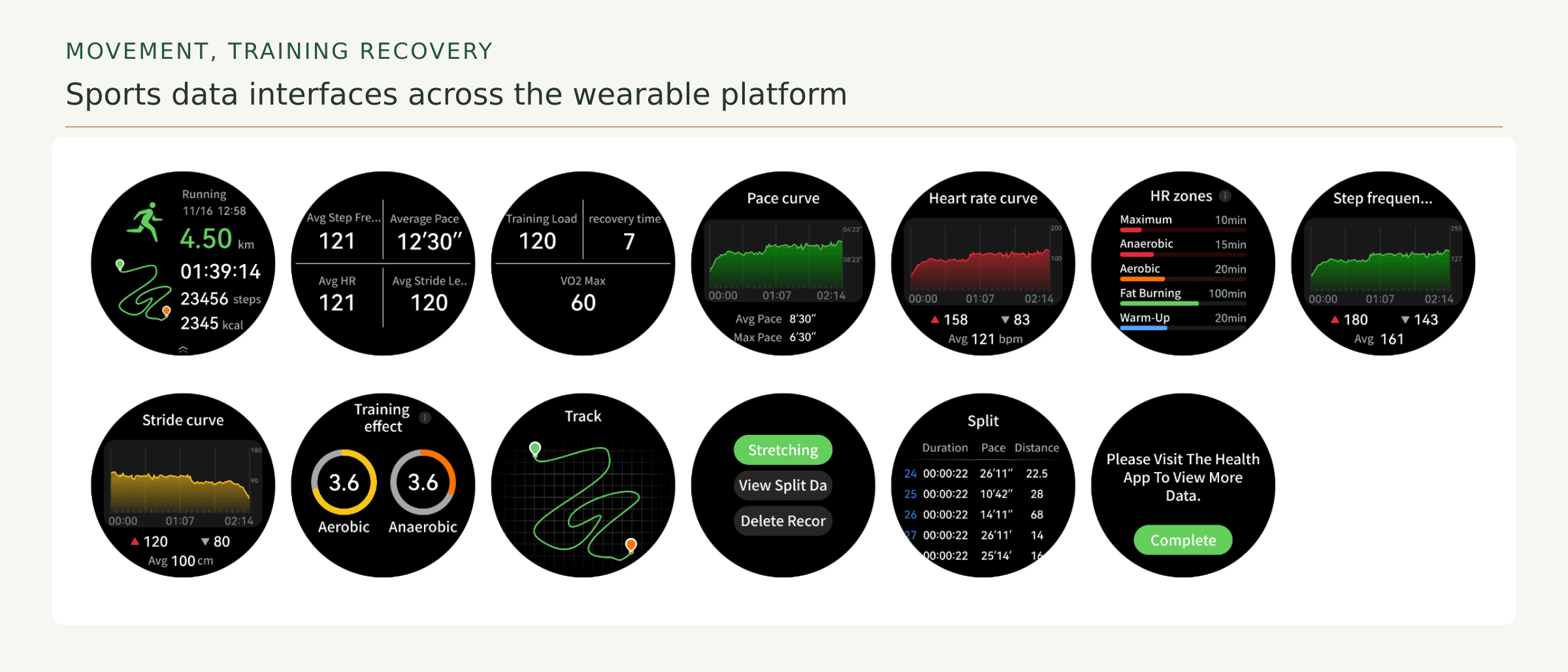
The specified water-resistance rating is 3ATM. Mechanical design and validation need to support that exact configuration, with clear care instructions. The platform also lists 150+ sports modes; the supplied professional algorithm material describes a focused group of 22 activity types. Those are different layers of capability, not interchangeable claims that every mode carries identical advanced metrics.
From a working sample to a repeatable product.
Connect R&D decisions with repeatable production
Connected development
SMA’s published capabilities bring industrial and mechanical design, hardware, firmware and app work together with component sourcing, SMT and assembly. For a custom golf watch manufacturer, that coordination is valuable when a software decision affects the physical product, or a component choice changes the validation plan.
One approved reference
The handover reference should include the approved hardware configuration, firmware version, interface assets, course-data package and accessories. Changes need to remain traceable to that reference. Otherwise, two samples that look identical can behave differently when they reach the course.
A practical validation plan
A suitable validation plan includes positioning checks, course-loading behaviour, sensor-data review, charging and power assessment, touch response and appearance inspection. Environmental and water-resistance work should match the agreed product specification. The value is in a repeatable check, with evidence the customer can assess, rather than a broad claim of testing everything.
A repeatable release
This is how golf watch OEM/ODM development moves beyond a promising prototype. The engineering team defines the intended behaviour; production needs a controlled way to reproduce it. Inspection and software-release discipline connect the two.
Carry the engineering story into the finished product
A technically capable watch still needs a clear introduction. Packaging, charging guidance and the quick-start material should explain the first playing session: how to prepare the device, find a course and begin using Golf mode. For a U.S. customer, plain English and consistent product terminology help make the handover feel considered.
SMA’s support can bring those materials together with the product and branding brief. The customer retains its understanding of the golfer and its own sales channels; our role is to connect that direction with the wearable development and manufacturing process.
The aim is a watch that leaves room for the game. Its depth is in the engineering; its value is in the small, clear moments it gives the player. A readable distance. An uncomplicated next step. A useful record of the round. That is the thread running through this R&D-led golf watch partnership, from the first brief to the approved production specification.